
 Canada
 Puerto Rico
 USA
 Belgium
 France
 UK
 India

Overview
Modernize IT Service Management With
AIOps-Driven Operations
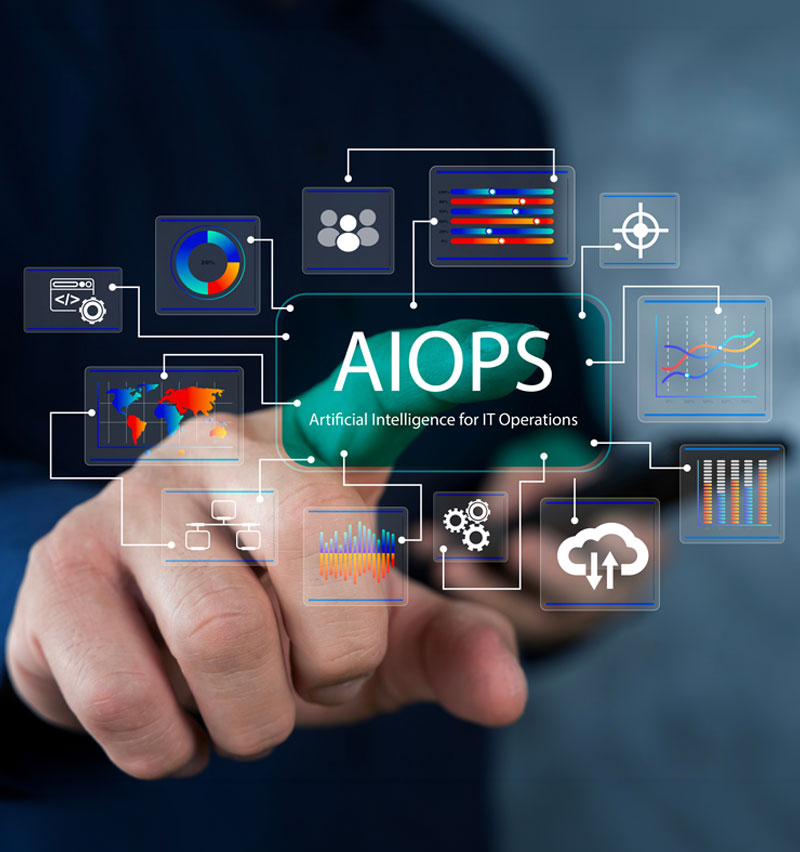
Intelligence Across Every IT Operation

Unified Monitoring & Observability
Gain a unified view across applications, infrastructure, cloud environments, and enterprise IT tools to identify issues and improve operational visibility.

Intelligent Event Management
Consolidate, suppress, deduplicate, and correlate events across multiple sources to reduce noise and identify related issues faster.
Automated Incident Management
Automatically convert relevant events into ITSM tickets and route them through predefined workflows, reducing manual intervention.

Agentic AI-Driven Root Cause Analysis & Automated Remediation
Identify underlying issues through event correlation and automate remediation for known problems to accelerate resolution.

Automated Patching & Workflows
Automate patching and operational workflows using AI agents to reduce repetitive tasks and improve IT operations efficiency.

Enterprise Integration
Connect ITSM platforms, applications, middleware, API gateways, and IT tools through APIs and agentic workflows.
Approach
A Closed-Loop AIOps Operating Model
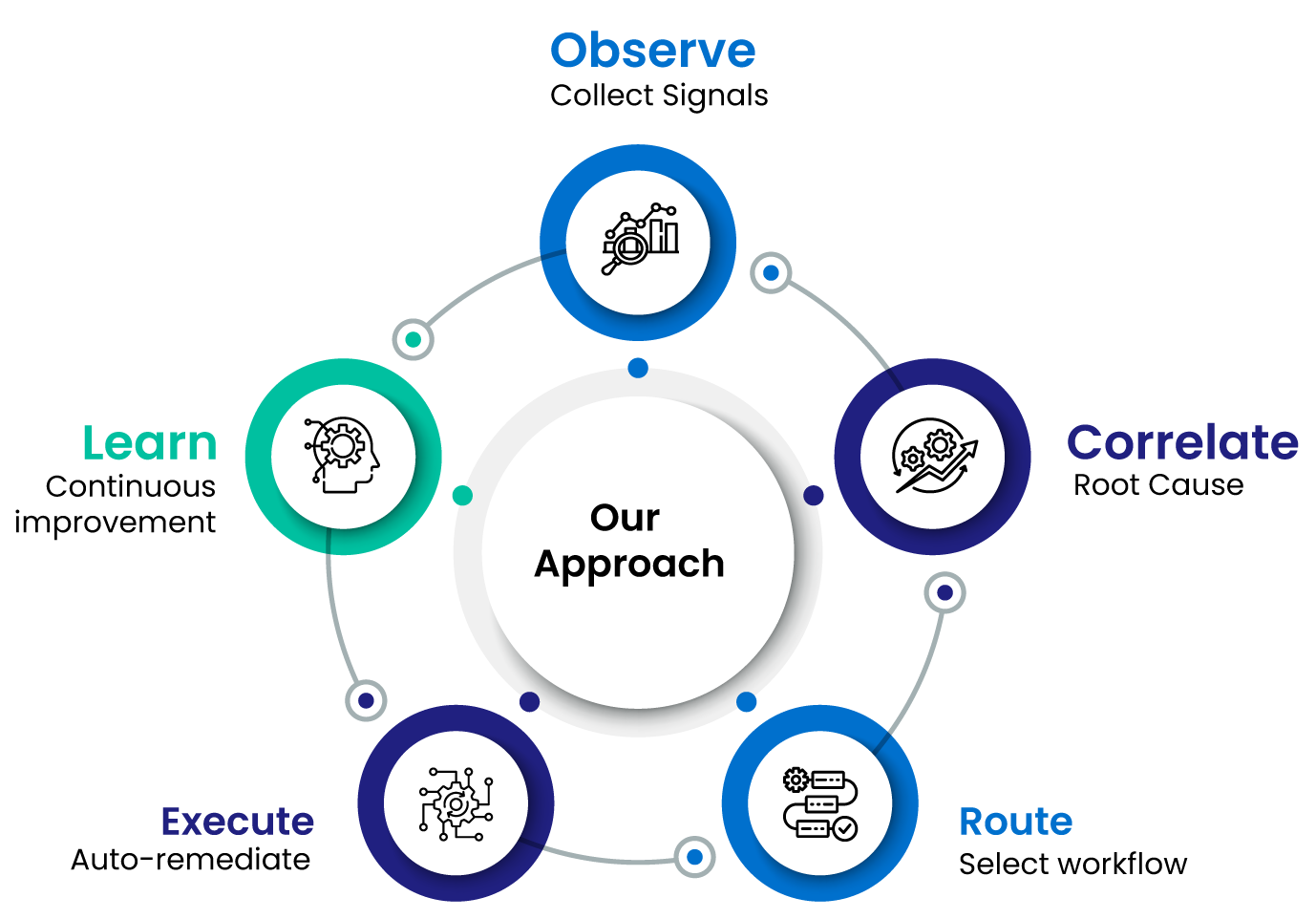
The AIOps architecture connects observability signals, event correlation, ITSM workflows, automation runbooks, and reporting into a closed-loop operating model. This enables IT teams to move from detecting incidents after impact to identifying patterns, triggering automated actions, and continuously improving service reliability.
Approach
A Closed-Loop AIOps Operating Model
The AIOps architecture connects observability signals, event correlation, ITSM workflows, automation runbooks, and reporting into a closed-loop operating model. This enables IT teams to move from detecting incidents after impact to identifying patterns, triggering automated actions, and continuously improving service reliability.
Measurable Impact at Scale

~80% Noise Reduction
Reduce operational noise through event suppression, de-duplication, correlation, and root-cause identification.

~50% Major Incident Avoidance
Detect issues before they become major incidents through proactive monitoring.

~30% MTTR Reduction
Increase automation and reduce noise to improve mean time to resolution.

~25% Ticket Reduction
Use AIOps-driven correlation, suppression, and automated remediation to reduce avoidable incident volumes and manual ticket handling.

70% Expansion in Visibility
Expand visibility across IT operations to identify performance risks, service gaps, and cost-optimization opportunities.

<12 Weeks Onboarding
Complete onboarding in fewer than 12 weeks, with measurable value realization within 18 weeks.

50% Faster Integration
Integrate additional monitoring sources and dashboards faster through reusable connectors, APIs, and standardized onboarding patterns.

100% Trained Resources
All Innova resources are trained to use the platform.

Standardized Operations
Improve consistency across monitoring, triage, automation, and reporting through standardized operating patterns.
AIOps in Action
A recent healthcare modernization engagement demonstrates the measurable impact of AIOps-led operations.
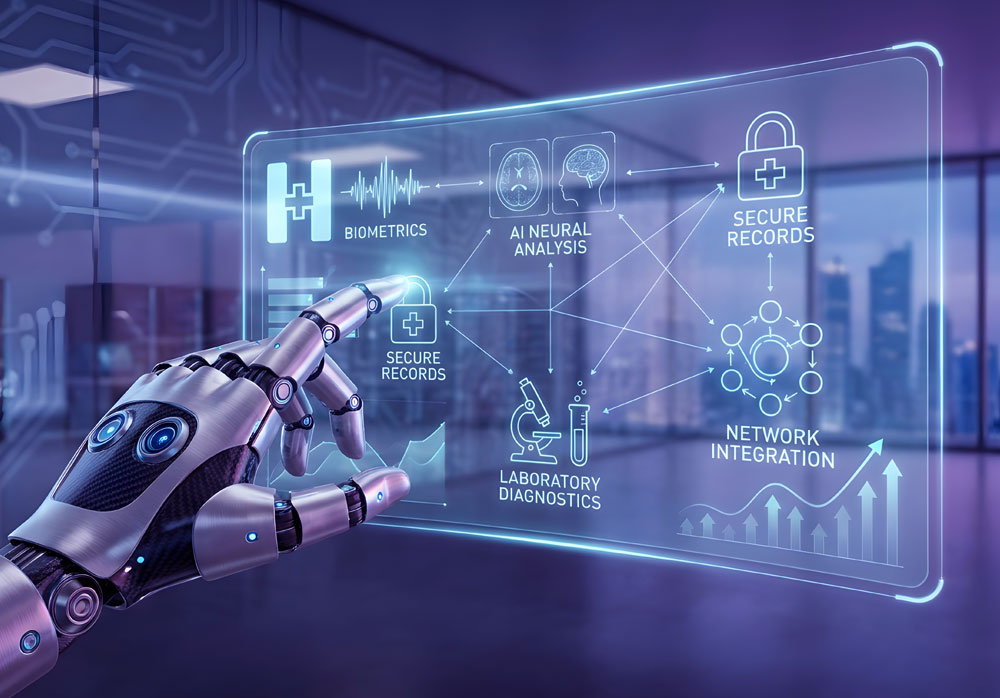
US Hospital System
- Migrated healthcare EHR workloads from on-premises data centers to Azure.
- Implemented an AIOps platform to monitor, triage, deduplicate, correlate, and notify operations teams based on 372 defined thresholds.
- Monitored compute, storage, backup, network, firewall, and database layers while aggregating logs from multiple monitoring tools.
- Enabled operations teams to review alerts and incidents, categorize triaged events, and prioritize remediation through a robust reporting dashboard.
- Achieved 99.91% availability and resilience across multiple regions and availability zones with AIOps-driven operations.
- Helped business to proactively identify potential failure points by dashboards and trend reports.
EXPLORE AIFICIENT
Other Key Impact Areas
AI
Engineering